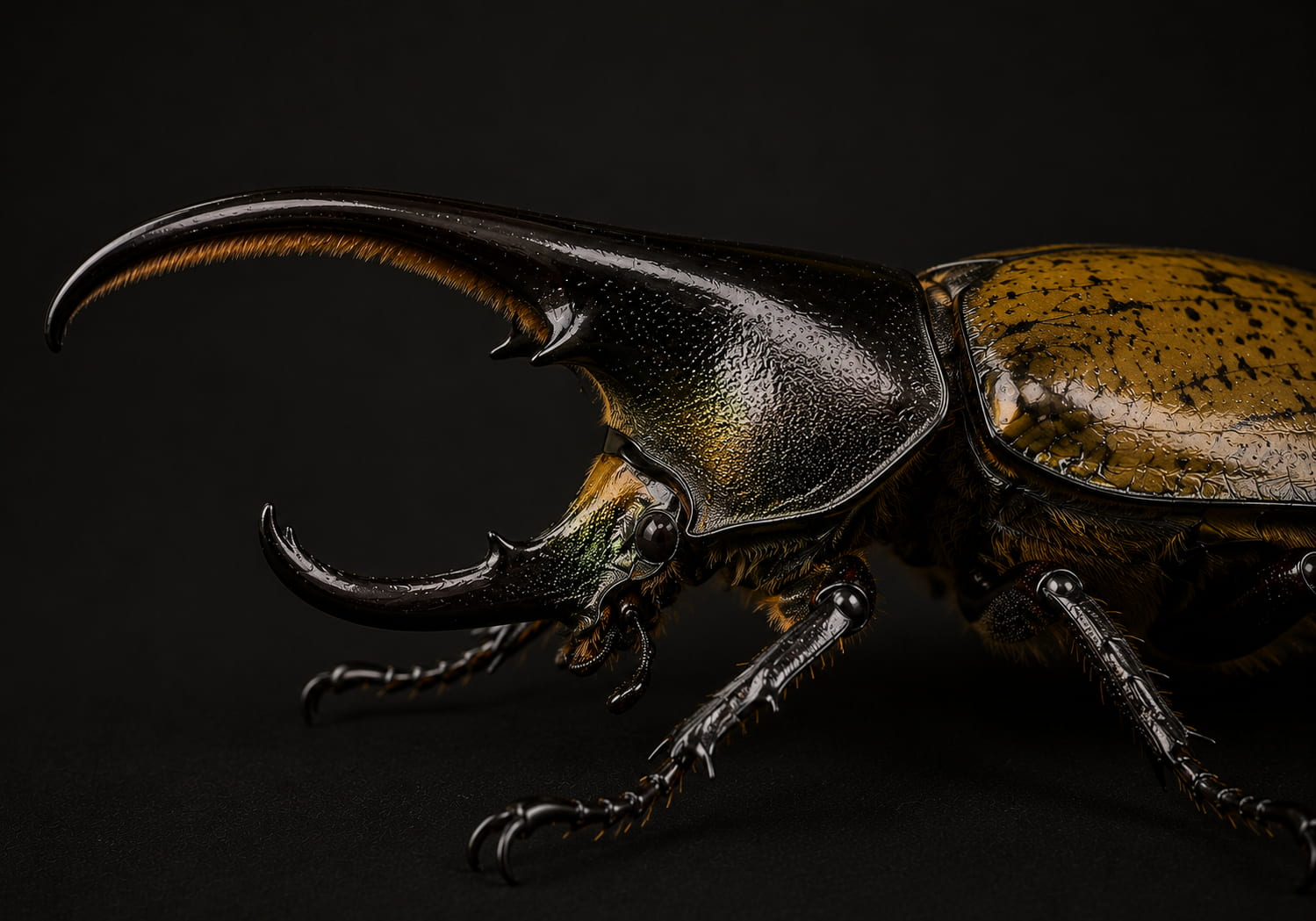
Hercules Beetle
The species most people picture first. Males carry an enormous thoracic horn that can make up nearly half their total length, yet they're calm and easy to handle. Larvae are slow, large, and need a long, well-fed development period — patience is the whole game here.
- RangeCentral & South America
- Adult size50–85 mm (males)
- Larval stage16–24 months
- Adult lifespan3–6 months
- DifficultyIntermediate
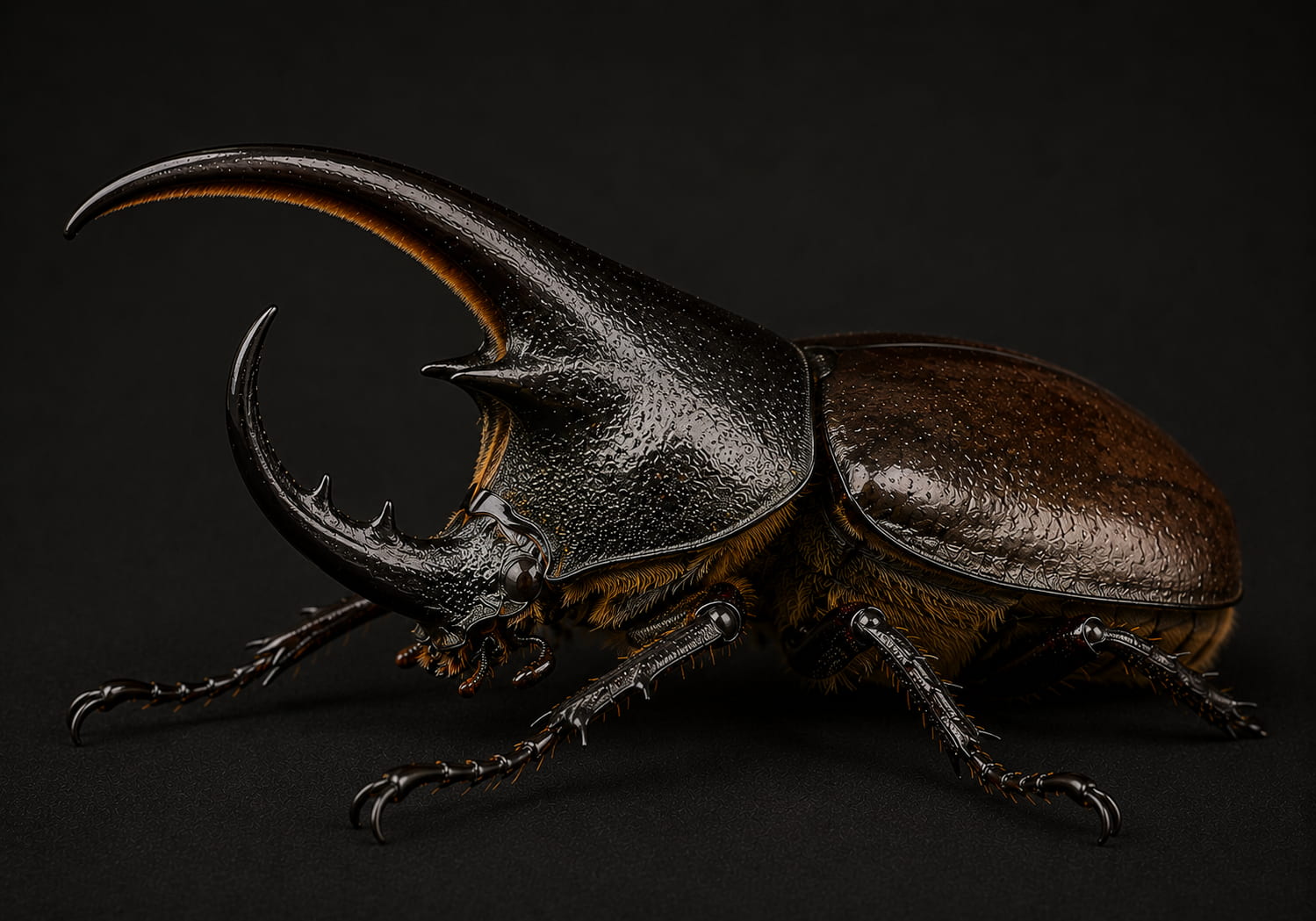
Atlas Beetle
Three sweeping horns — two from the thorax, one from the head — and a temperament to match. Atlas males are notably feisty and best housed alone. A glossy black, almost armoured look makes them a standout display animal for keepers ready for something with attitude.
- RangeSoutheast Asia
- Adult size40–80 mm (males)
- Larval stage8–14 months
- Adult lifespan2–4 months
- DifficultyIntermediate
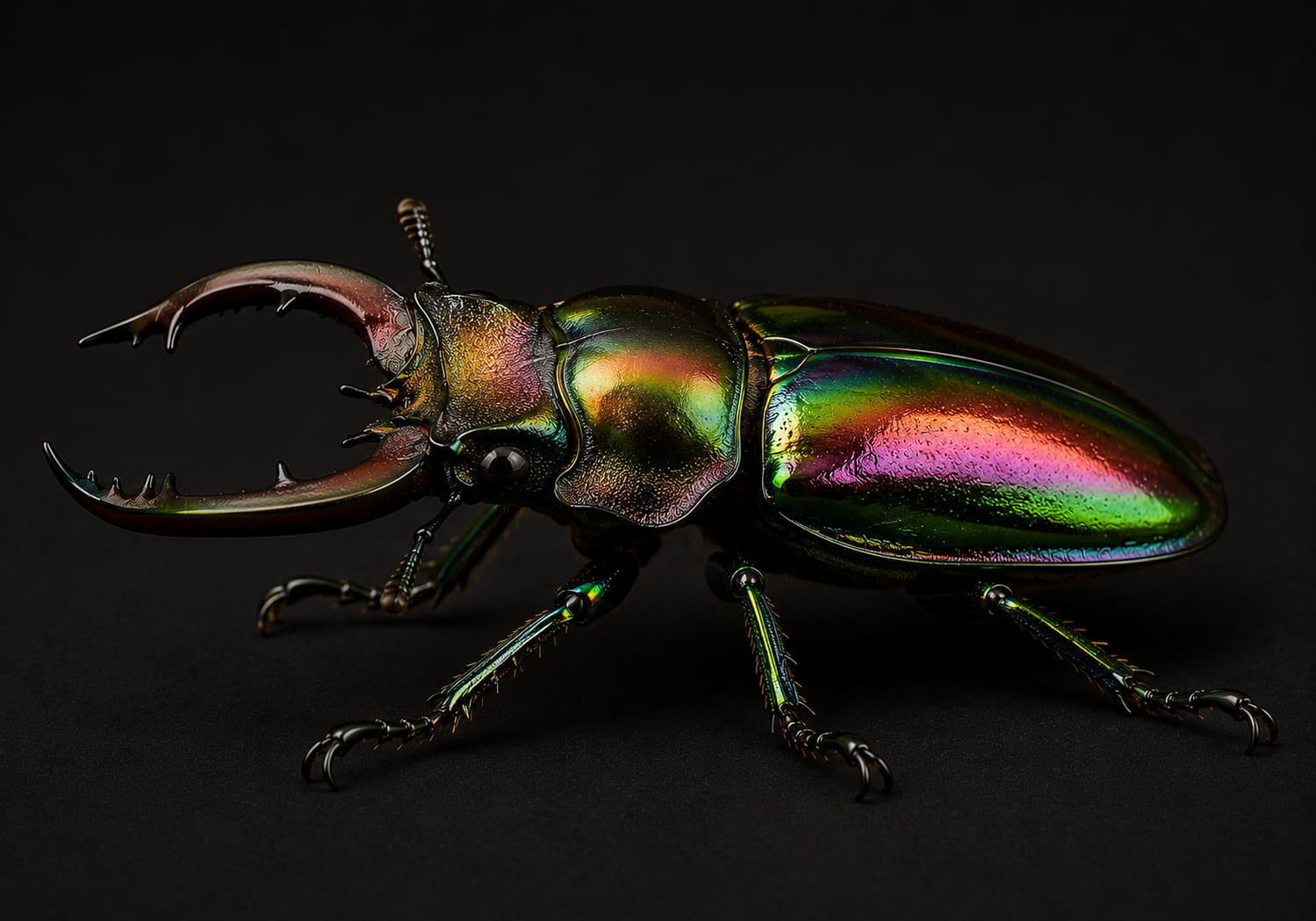
Rainbow Stag Beetle
Arguably the most beautiful beetle you can keep — a metallic shell that flares green, gold and red as it moves. It also happens to be one of the more forgiving stag beetles to breed, tolerating a wide temperature range and reproducing readily on quality flake soil.
- RangeNorthern Australia
- Adult size24–70 mm
- Larval stage6–12 months
- Adult lifespan6–12 months
- DifficultyBeginner-friendly
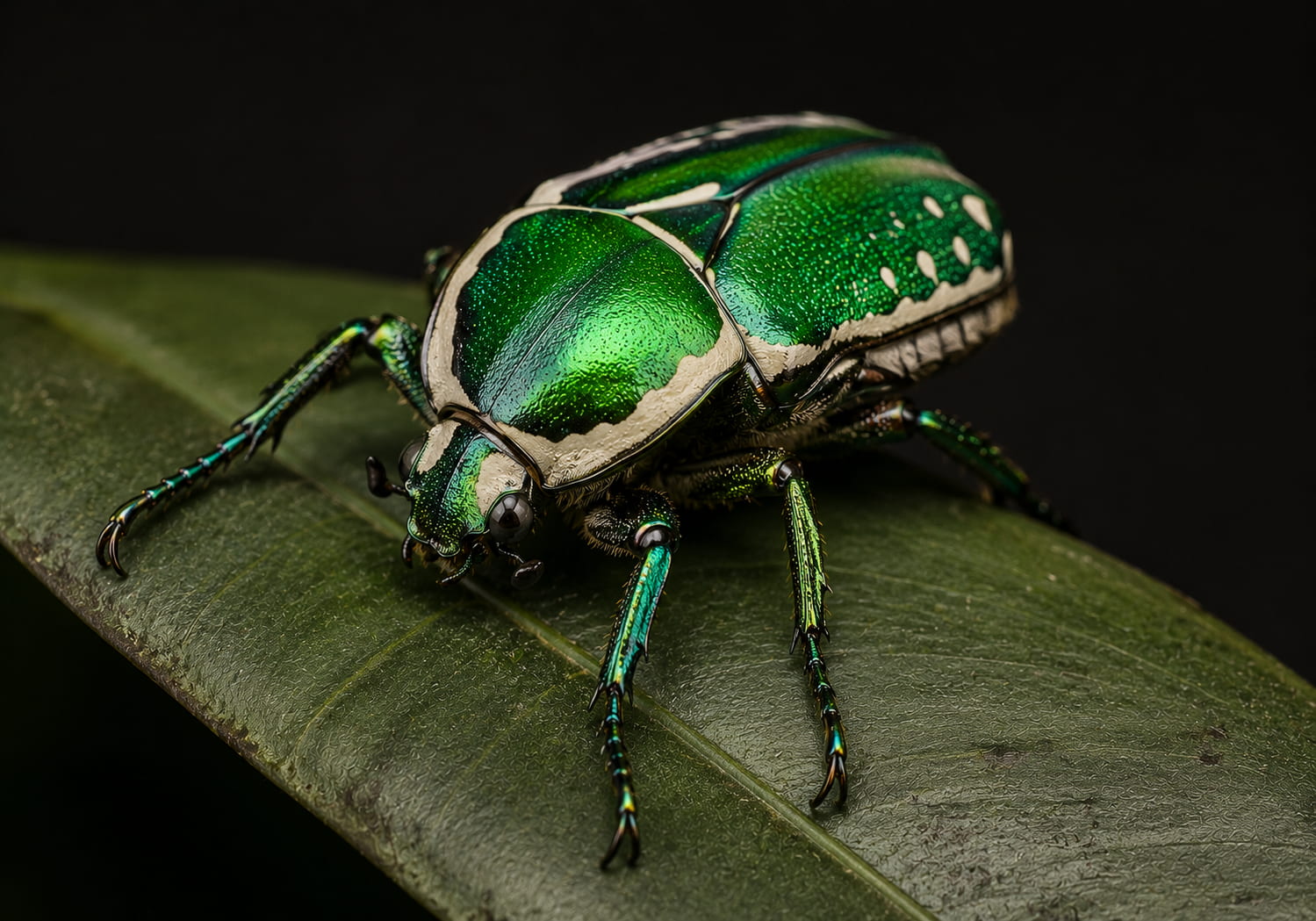
Flower Beetle
Bold, day-active and quick through its life cycle, the flower beetle is the species most often recommended to newcomers. It feeds happily on fruit and beetle jelly, flies readily, and rewards keepers with a fast turnaround from egg to adult.
- RangeCentral & West Africa
- Adult size50–85 mm
- Larval stage4–7 months
- Adult lifespan3–5 months
- DifficultyBeginner-friendly